Mastering Your Grades with a Weighted GPA Calculator
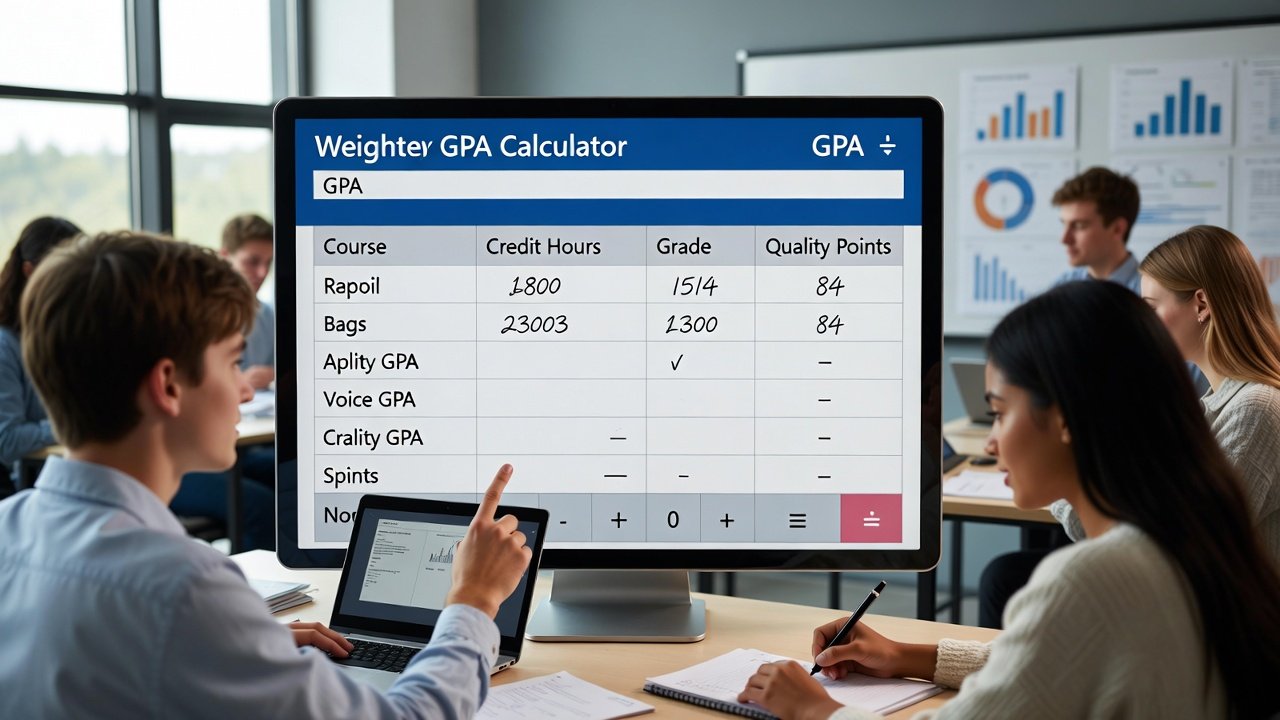
In the competitive world of academics, understanding your performance goes beyond simple averages. A weighted GPA calculator is an essential tool for students seeking a clear picture of their achievements, especially when courses vary in difficulty. Whether you’re in high school preparing for college applications or in college tracking your progress, this calculator helps account for the extra effort required in advanced classes.
Understanding the Basics of GPA
Grade Point Average, or GPA, serves as a numerical representation of your academic success. It’s calculated by averaging the points earned in each course, but not all GPAs are created equal. Some schools use a straightforward, unweighted system, while othersuse weighted systems to reflect course rigor.
At its core, GPA measures how well you’ve performed across your classes. Each letter grade translates to a point value—typically, an A is 4.0, B is 3.0, and so on down to F at 0.0. But when honors, AP, or IB courses enter the mix, the scale shifts. That’s where weighting comes in, adding bonus points to recognize the challenge.
Students often overlook how these nuances affect their overall standing. For instance, excelling in a standard class may easily boost your score, but tackling advanced placement options demands more strategy. Recognizing this early can shape your educational path.
What Sets Weighted GPA Apart?
A weighted GPA acknowledges that not every class is the same. In an unweighted system, every course contributes equally, capping the maximum at 4.0. Weighted systems, however, can raise that ceiling—often to 5.0 or even 6.0—by assigning extra points to tougher classes.
Imagine two students: one takes all regular courses and earns straight A’s, landing a perfect 4.0. The other mixes in AP classes, also getting A’s, but their weighted GPA might climb to 4.5 or more. This distinction matters hugely for scholarships, college admissions, and even personal motivation.
Colleges love seeing weighted GPAs because they highlight a student’s willingness to challenge themselves. Admissions officers scan transcripts for evidence of rigor, and a higher weighted score signals that. But calculating it manually? That’s where errors creep in, leading many to rely on a weighted GPA calculator for accuracy.
Why You Need a Weighted GPA Calculator
Manually tallying grades with weights is tedious and prone to mistakes. A weighted GPA calculator simplifies this by automating the process. You input your courses, grades, and credit hours, and it spits out a reliable number.
Think about the time saved. Instead of scribbling formulas on paper, you focus on studying. Plus, these tools often include features such as semester breakdowns and cumulative projections, helping you plan.
For high schoolers, especially those eyeing competitive universities, knowing your weighted GPA early can influence course selections. If your score is lagging, you might opt for more weighted classes to boost it. College students use them to maintain eligibility for honors programs or financial aid.
Beyond convenience, a weighted GPA calculator provides insights. Some versions graph your progress over time, revealing trends like improvement in the sciences but slipping in the humanities. This data-driven approach turns vague goals into actionable plans.
Step-by-Step Guide to Calculating Weighted GPA
Let’s break down how to use a weighted GPA calculator effectively. First, gather your transcript or grade report. Note each course, its grade, credit hours, and whether it’s weighted.
Step one: Assign point values. Standard classes follow the basic scale—A=4.0, B=3.0, etc. For weighted courses, add the bonus: usually 0.5 for honors and 1.0 for AP/IB.
Step two: Multiply each grade’s points by the credit hours. This gives the quality points for that class.
Step three: Sum all quality points and divide by total credit hours. That’s your GPA.
Now, plug this into a weighted GPA calculator. Most online versions have fields for course name, grade, credits, and weight level. Hit calculate, and voila—your score appears.
For example, suppose you have an AP Biology (A, 1.0 weight, 1 credit), Honors Math (B, 0.5 weight, 1 credit), and standard English (A, no weight, 1 credit). The calculator adjusts: AP gets 5.0, Honors 3.5, English 4.0. Total quality points: 12.5 divided by 3 credits equals about 4.17.
Practice with hypotheticals in the tool to see how changing a grade impacts the overall. This experimentation builds intuition for academic decisions.
Common Pitfalls When Using a Weighted GPA Calculator
Even with a tool like a weighted GPA calculator, mistakes happen. One frequent error is misclassifying course weights. Not all schools use the same system—some add 0.5, others 1.0, and a few scale differently for dual enrollment.
Another issue: forgetting credit hours. If a class is worth 2 credits, it should count for 2 credits, but users sometimes enter everything as 1 credit.
Input accuracy matters too. Typos in grades or credits skew results. Double-check entries against your official records.
Some calculators assume a standard scale, but variations exist. International students might encounter different grading systems, such as percentages instead of letter grades. Choose a flexible weighted GPA calculator that allows custom scales.
Lastly, don’t rely solely on the number. Context is key— a 4.2 weighted GPA with easy classes might not impress as much as a 3.8 with rigorous ones. Use the tool as a starting point, not the end-all.
Strategies to Boost Your Weighted GPA
Improving your score starts with smart choices. Prioritize weighted courses where you excel. If science is your strength, load up on AP Biology or Chemistry to leverage those bonuses.
Time management is crucial. Weighted classes demand more hours, so balance your schedule. Avoid overloading semesters; spread challenges evenly.
Seek help early. Tutors, study groups, or office hours can turn a B into an A, amplifying your weighted GPA.
Track progress mid-semester using a weighted GPA calculator. If a class is dragging you down, adjust your study habits before finals.
Extracurriculars indirectly help, too. Skills like organization from sports or clubs translate to better academic performance, supporting higher grades in weighted courses.
Remember, consistency beats cramming. Regular review keeps knowledge fresh, leading to stronger outcomes across the board.
The Role of Weighted GPA in College Admissions
Admissions committees scrutinize weighted GPAs to gauge readiness. A high score in challenging classes suggests you can handle college-level work.
But it’s not just the number—class rank, derived from weighted GPA, plays a role. Top percentiles stand out.
Standardized tests complement this. A solid SAT or ACT paired with a strong weighted GPA paints a complete picture.
For scholarships, many require a minimum weighted GPA. Tools like a weighted GPA calculator help monitor if you’re on track.
International applicants: U.S. colleges often convert foreign grades to weighted scales, so understanding the process helps ensure anccurate self-assessment.
Ultimately, your weighted GPA tells a story of perseverance and ambition. Use it to your advantage in essays and interviews.
Advanced Features in Modern Weighted GPA Calculators
Today’s weighted GPA calculators go beyond basics. Some integrate with school portals to automatically pull grades.
Predictive modeling is a game-changer: input future courses and estimated grades to forecast your GPA trajectory.
Mobile apps make on-the-go checks easy. Notifications alert you to drops, prompting timely interventions.
Customization options cater to unique systems. Adjust for pass/fail classes or different weighting schemes.
Data visualization—charts and graphs—turns numbers into insights and visually spot weaknesses for targeted improvement.
Privacy features ensure your data stays secure, which is important for sensitive academic information.
Integrating Weighted GPA into Long-Term Goals
Think big picture. Your weighted GPA influences not just admissions but career paths. STEM fields often value high weighted scores from rigorous math and science courses.
Graduate schools look back at undergrad weighted GPAs. Maintaining a strong one opens the door to master’ss orPhD programsprogramss.
Professional certifications sometimes require GPA thresholds. Early awareness via a weighted GPA calculator sets you up for success.
Personal growth ties in, too. Striving for a better score builds discipline, transferable to life beyond school.
Revisit your calculations periodically. As goals evolve, so should your academic strategy.
Debunking Myths About Weighted GPA
Myth one: Weighted GPA inflates scores unfairly. Reality: It levels the playing field, rewarding those who challenge it.
Myth two: All colleges prefer weighted over unweighted. Actually, many recalculate using their own methods, but providing both helps.
Myth three: You can’t recover from a low weighted GPA. Not true—with focused effort in subsequent semesters, you can raise it significantly.
Myth four: Calculators are always accurate. They’re only as good as your inputs, so verify with official sources.
Dispelling these clears confusion, letting you use a weighted GPA calculator confidently.
Real-World Applications Beyond School
Weighted GPA concepts extend to professional evaluations. Performance reviews often weigh tasks by importance, similar to how course credits are awarded.
In project management, prioritizing high-impact work mirrors choosing weighted classes.
Even in fitness tracking, apps weight activities by intensity—paralleling academic weighting.
Understanding these parallels enhances problem-solving skills, making you more adaptable.
Conclusion: Empower Yourself with Knowledge
Mastering your academic journey requires tools that provide clarity and direction. A weighted GPA calculator isn’t just a convenience—it’s a strategic asset that helps you navigate challenges, make informed decisions, and achieve your potential. By incorporating it into your routine, you gain control over your education and turn aspirations into realities. Stay proactive, keep learning, and watch your efforts pay off.