Table of Contents
- A Pioneer in the Shadow
- Early Life and the Spark of Curiosity
- The Formative Years: Building a Scientific Foundation
- A Legacy in the Lab: Groundbreaking Research on Cancer and Viruses
- The Architect of Support: Founding the Indian Women Scientists’ Association
- Mentor and Torchbearer: Nurturing the Next Generation
- The Unsung Impact of a Scientific Legacy
- Remembering a Trailblazer
A Pioneer in the Shadow
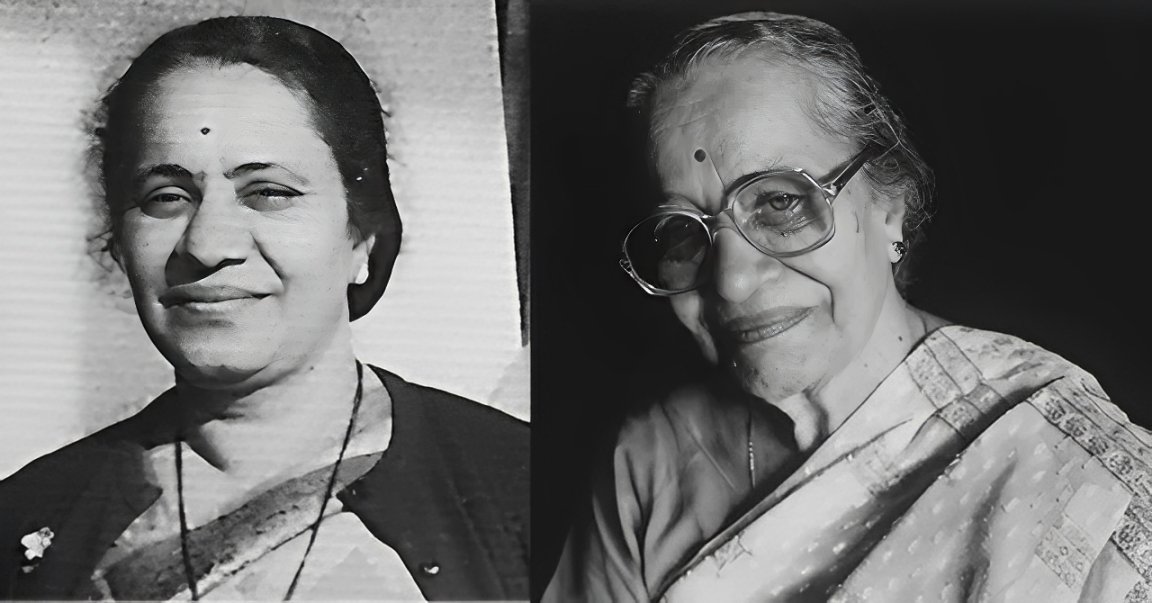
There are several prominent names in the history of 20th-century science, and countless others who, while perhaps less celebrated, played a critical role in laying the foundation for progress in the field. One of these crucial underappreciators was Dr. Kamal Ranadive, a name that deserves to be etched alongside her contemporaries.
The story of Dr. Kamal Ranadive is not only one of unique individual scientific achievement; it is also a story of systematically constructed achievement. Dr. Kamal Ranadive’s life work has a unique dual legacy; it has a profound impact on the scientific community’s understanding of cancer and a transformative impact on the fight for gender equity within Indian science.
Early Life and the Spark of Curiosity
Kamal was born in Pune, India, in 1917, and she grew up in an unconventional family. Her father was a biologist with a doctorate from Harvard, and her mother was a teacher. This family background instilled in Kamal a love of education, but it was not just a support system. They were actively instructing her in an unconventional way, going against the societal pressures of the time that relegated women to the home.
In her early years of schooling, Kamal’s academic interests were towards Botany. This interest was encouraged and even accessible to her. She completed her Bachelor’s and Master’s degrees in the subject. However, the microscopic World of cells, with its complex mechanics governing life, disease, and growth, began to exert a stronger pull.
Kamal’s love for education pushed her to seek complex questions to solve that would impact people’s lives, including those with cancer. This would define the rest of her career. This was the first in a long line of innovative and striking decisions she would make.
The Formative Years: The start of a career.
To appreciate the significance of Dr. Kamal Ranadive’s research, it is essential to understand what Indian science looked like in the mid-twentieth century. There were scarce resources, little to no international collaboration, and institutions were unsupportive of independent researchers, particularly women.
Dr. Ranadive was pursuing her doctorate and went to the Indian Cancer Research Centre (ICRC) in Mumbai, where she would work for the next few decades.
While at ICRC, Kamal Ranadive found her calling in science under the mentorship of the highly regarded virologist, Dr. V. R. Khanolkar. Vindhya was a distinguished virologist, and like most great thinkers, he was able to identify the incredible attention to detail that Kamal possessed, along with her intuitive and fast understanding of the key concepts in science.
He encouraged her to focus on developing a branch of science, cell biology, and its nexus with oncology. Kamal earned her doctorate in 1949, the year her research on animal tissue culture was awarded; it was an advanced and complex methodology for the time.
She went on to receive a fellowship to travel to the United States. She worked at the highly regarded Johns Hopkins University and later at the Rockefeller Institute. This exposed her to internationally regarded laboratories. She mastered advanced techniques, pedagogies, and a rigorous, hypothesis-driven approach that she planned to bring and cultivate in India.
A Legacy in the Lab: Dr. Kamal Ranadive and the Study of Cancer and Viruses
Dr. Kamal Ranadive returned to India to the Indian Cancer Research Center and proved to everyone there that she was a pioneering independent researcher. She was among the first researchers to conduct innovative studies examining the links between viruses and cancer. Dr. Kamal Ranadive brought India to the forefront of this field of study.
Dr. Kamal Ranadive and her team earned several firsts in the study of viruses and cancer:
Inbreeding Cancer-Prone Mice
The team was the first in India to create inbred strains of mice predisposed to breast cancer. With this, the team achieved a milestone. Not only were they able to breed the mice, but the mice could also be used to conduct controlled studies on the progression of breast cancer and the various triggers that may be involved.
Viral Leukemia and Cancer Studies
She was the first to conduct studies on the possible viral etiology of cancer, including breast cancer and leukemia. Her work surveying the Marek’s Disease virus in poultry and its potential to cause cancer was among the studies she conducted that were most impactful. She provided the earliest evidence of the viral transformation of cells. This evidence has validated a significant number of theories in cancer biology today.
Leprosy and Chromosome Analysis
Dr. Kamal Ranadive proudly specialized in cell biology and leprosy. She studied the chromosomal abnormalities in the patients, trying to understand the disease at a genetic level, which, in fact, was very advanced for the time.
As for Dr. Kamal Ranadive’s scientific output, it was characterized by a notable degree of orthodoxy and an emphasis on fundamentals. She wasn’t in it for the ‘glory’; she sought to understand the fundamentals to ensure there was enough scientific knowledge to shift paradigms in the future.
Dr. Kamal Ranadive’s name may not have appeared in a significant number of publications; however, the publications she was associated with had a substantial impact in the scientific World. She was, and still is, well recognized for establishing a research framework that enables other scientists to continue research in years to come.
The Architect of Support: Founding the Indian Women Scientists’ Association
If she were a laboratory worker, which one of the pillars of her legacy was? The other was just as important: her work advocating for women in science.
Dr. Kamal Ranadive experienced the realities of women scientists: the juggling of family duties and career responsibilities, the job of ‘invisibility’, the absence of child care in institutions, and the loneliness of being one of the few women in an overpopulated male sphere.
Instead of just suffering, she took action. In 1973, she, along with other pioneers like Dr. Anna Mani, established the Indian Women Scientists’ Association (IWSA). This was not a mere social engagement; it was a calculated, necessary action.
Under the leadership of Dr. Kamal Ranadive, the IWSA provided the following services:
- Creating Community: It dismantled the loneliness by providing a space for mentorship, partnership, and encouragement.
- Addressing Practical Barriers: The association focused on providing child care services within research facilities. This simple innovation enabled many women to pursue their careers.
- Advocating for Equity: The association fought for unearned entitlements across recruitment, promotions, and grants. This activism, along with other initiatives, provided the association with an equitable voice.
- Public Outreach: The IWSA conducted pure and applied research to motivate girls to pursue careers in the various branches of science to benefit the community.
Through the IWSA, Dr. Kamal Ranadive’s influence was magnified. She was not only a great scientist; she was also a builder of institutions, multiplicatively empowering hundreds (if not thousands) of women.
Mentor and Torchbearer: Nurturing the Next Generation
The IWSA reflected the values of Dr. Kamal Ranadive. For Dr. Ranadive, mentoring was a valued and invested practice. Her lab was a training ground for Indian cell biologists, pathologists, and cancer researchers.
Dr. Ranadive’s lab was characterized by a strong work ethic and a commitment to viral experimental techniques, qualities she wanted all her students and protégés to possess. As a group, her protégés established their own laudable careers, and the agility and virulence they acquired from Dr. Kamal Ranadive had a significant influence on the work of Indian biomedical researchers.
The Unsung Impact of a Scientific Legacy
Dr. Kamal Ranadive Diamond retired from the Indian Cancer Research Centre. In 1982, she received the Padma Bhushan, one of India’s highest civilian awards, and the Watumull Foundation Award.
For the global community, and in comparison to her civil values and transformative community service, Dr. Ranadive’s name is often absent from the record of evident contributions to the Social/Science history of the World.
Why does this matter? The story of Dr. Kamal Ranadive fills in a gap in history. It reminds us that extraordinary accomplishments in science do not have to be attributed to individual “Eureka!” moments from Western men.
Outstanding achievements in science can also come from painstaking and celebrated work of building the capacity for tools, frameworks, and training theitable systems to foster discovery. The life of Dr. Kamal Ranadive exemplifies the truth that the struggle for social justice in science is the struggle for the very soul of science.
Remembering a Trailblazer
Dr. Kamal Ranadive’s legacy is very much alive even though she died in 2001. It lives in her academic descendants, in the unyielding work of the IWSA that continues to advocate for women scientists in India, and in every young Indian girl who, upon learning of Dr. Ranadive, envisions herself in a lab coat.
The example set by Dr. Kamal Ranadive showcases how true, pioneering, and multifaceted. She was a pathbreaker in the lab, breaking foundational truths in cancer biology. She was a pathbreaker in society, building ladders for other women to climb.
Her story is not one of compromise between these two missions, but rather their powerful synergy. By championing others, she reinforced the scientific enterprise. In celebrating Dr. Kamal Ranadive, we celebrate the principle that diversity, equity, and hard inquiry are not just about diversity and equity but are the interconnected drivers of progress.
You may also read weightedgpacalculator.